1) I do not follow Major League Baseball closely any more. I'd be hard-pressed to name 5 players who are currently active. The first name that comes to mind, though, is Ichiro Suzuki. I recently wondered whether he had retired and came across this haunting, haunting piece about Ichiro - the man who has become the very thing he hated to become as a 3 year old. Very sad.
2) If a tree is falls in a forest but there is no one to hear it does it make a sound? The best bowling analysis EVER in a T20 match happened at Lal Bahadur Stadium in Hyderabad but to the cricketing it world it does not exist. Alfred Absolem took a scarcely believable 7 wickets for 15 runs but his achievement will probably never be acknowledged because it was a played between two teams in the Indian Cricket League (ICL) which was obliterated by the IPL/BCCI within a few years.
3) The only NFL player I actually wanted to watch in person was Randy Moss. I managed to do it once at Ford Field in Detroit. If you want to know why he has great, watch this: EVERY TD of his greater than 40 yards. Mind you, these are only those that were 40 yards or longer....
Whom the gods would destroy, they first make mad with power. Charles A. Beard One week ago, Steven Smith was the undisputed leader of the Australian team. Of late his batting had reached a plane occupied by only The Don himself. He led a rout of the English in the Ashes and began the tour of South Africa with a thumping win in the first Test. Life was good. Today, he stands on the cusp of the unknown, his Fate hanging in the balance, to be determined by others whom he has no control over. A rabid mob is baying for blood, happily throwing stones from glass houses, determined to bring down a man who was flying so high, he didn't realize he was getting perilously close to the sun. Paradoxically, even as the sun is melting his wings it has begun to set on his playing career. Not in the physical sense. Smith will come back from this after serving whatever ban is imposed on him. He is 28 years old and, I suspect, will be given a one year ban from the game. Much like Shane Warne's one year exile in 2003 did no damage to his ultimate playing aura, Smith's year in absentia will not impede him too much. The sun is, however, setting on his reputation. Once someone is labeled a cheat, that sticks for life no matter how hard you try to make amends for it. Especially in today's world of instant condemnation and slow forgiveness. I'm not sorry for Steve Smith. He decided to cheat and should pay the price for doing it. Most importantly, because it was premeditated. Integrity is doing the right thing when no one is watching you. Unfortunately, for Steve Smith, over 30 cameras were watching closely. Thank heavens they were.
Picture this: India is batting in the third inning of a Test match. It is midway through Day 4 and the team is trailing by 125 runs. One need not know too much about Indian cricketing history to know how the rest of the story plays out. In an attempt to play for a draw, some of the most elegant and exciting batsmen in the world will will eschew every risk known to batsmankind and block every delivery that comes their way. Soon, the pressure will build, a tiny mistake will be made and a feeble lead will eventually be produced before, on Day 5, the opposing team polishes away a small target with the loss of a couple of wickets, thereby giving the Indian team "something to build on".
In the most recent Kolkata Test match between Sri Lanka and India, India began the second inning staring at a 120-odd run deficit. But this Indian team, under Virat kohli's bristling, in-your-face leadership is a different beast altogether. Soon it is 166 for no loss in 37 overs...and the match transforms.
But, there is a twist in the tail. Day 5 begins with the Indians playing a subdued game and staring at difficult times with the lead just 170 runs when the 7th wicket fell.
At that point in time, Virat Kohli was batting time, still managing to be on 58 off 93 balls. The game was in the balance and, breathtakingly, the anti-Tendulkar came to the fore. Rather than retreat into a shell, and try to shield the tail, Kohli went into ODI-mode and took the attack to the Sri Lankans. Boundary after boundary followed and the Indian captain turned the match on its head with a totally-safe but very aggressive display of walking the talk. In the next 28 balls, he scored 46 of the most risk-free but dashing runs imaginable and reached 104 not out with an inside-out six over wide mid-off that was as exciting as it was inevitable. And then India declared! Setting Sri Lanka 237 runs to get off (possibly) 40 overs. Realistically, because of the deteriorating light conditions it was closer to 30 overs and the Indian bowlers came to the party with a vengeance.
Bhuvaneshwar Kumar repaid his captain's faith (11-8-8-4) and when light finally rescued the Sri Lankans, they were tottering at 75 for 7.
A stunning turnaround orchestrated by a man who is, hastily, rewriting how the rest of the cricket world is going to view Indian cricketers. In a good way.
Virat Kohli just turned 29, scored his 50th international century, captained the 30th Test of his career, and oddly, looks like he is just now getting started.
Suddenly, away tours to South Africa, Australia, England and New Zealand don't seem as daunting any more.
Only one man could bring me out of blogging semi-retirement: the Rajah himself.
The story arc of Roger Federer's resurgence has been written many times over by multiple authors around the world and I will not repeat it here. A cursory Google search will suffice. Instead I want to put down some random, disjointed thoughts that float through my brain...
a) For a long time DH and I were reconciled to the fact that he'd be stuck on one prime number - 17. When he won #18 earlier this year in Australia, DH remarked that he would HAVE to win one more to get back to a prime number because that's where he should be (by himself and one). Well, what do you know? It may be time to start thinking of 23 now. Impossible? Well, many of us thought 18 was impossible.
b) Remember this commercial from 10 years ago? It was released on July 6th, 2007, just moments after Roger had won his 10th major and was narrated by Tiger Woods who ended it with the haunting words: My name is Tiger Woods. I have 12 majors and counting. So keep up, buddy.
Yesterday, Roger did what Tiger always dreamed of - overtaking Jack Nicklaus' major count (18). For the record, Tiger has stalled at 14 for over eight years and it does not appear he is going to add to that total.
c) The Federer of 2017 is winning because he is better than the Federer of a few years ago. He is winning because he has improved. His backhand, especially, is a lot flatter and more potent. the elegant top-spin laden one has been beefed up by another version - a flattened, whiplash of a shot that singes across the court with power that is approaching Wawrinka territory.
d) The 2017 Wimbledon final was, finally, lacking in excitement or prolonged tension for Federer. But I am not complaining one bit. I'll take that any day over the 5 set gut-wrencher from earlier this year at the Australian Open where he was (gasp!) trailing 1-3 in the fifth set. Even today I sometimes break into a cold sweat thinking about what might have happened had Roger not raised his game.
Imagine this - Nadal wins the Australian Open. Suddenly the major head-to-head is 17-15 in Roger's favor with the French Open coming up where Nadal would make it 17-16. Oh dear...the GOAT narrative would have taken a drastic turn for the worse for us FedFans. Phew! Thank heavens for that atomic backhand (and Robin Soderling).
e) The loss to Juan Martin del Potro at the 2009 US Open stung for a long, long time. Then came the capitulation to Marin Cilic in 2014 when all Roger had to do was take out Cilic and then Kei Nishikori (neither of whom he had ever lost to at that point in time). For years, I've wondered what those two missed US Opens would have done for his legacy. Suddenly, after what has transpired this year, the pain has eased tremendously.
f) Roger is the only man to have played at least 5 finals at each major. At the French, he has one win (in 2009, thank heavens for Soderling) and 4 losses to the clay GOAT - Rafael Nadal. One wonders what the actual count might have been if the gods had not sent Nadal to mess with us FedFans.
g) But seriously, just watch these 5 games from the 5th set of the 2017 Australia Open again and marvel at how close it was to being a completely different narrative. A matter of inches...literally, on multiple occasions.
h) In 2012 after the Olympics in London, in spite of winning a silver medal, it seemed quite inconceivable that Federer would last as long as Rio in 2016. Verily, it came to pass - Federer did not play in Rio while recovering from his myriad injuries. But if you had told me in 2012 that he would not play in Rio but would win multiple majors in 2017, I would not have believed it possible. I am still having a tough time believing it.
i) Hailing from a nation where we revere the Krishnans and Amritraj for simply making it to the quarter-final at Wimbledon, it is astonishing to think that Federer has played 70 Grand Slam events (tied for first all-time with Fabrice Santoro) and has reached the quarter-final or better in 50 of them. Yes, 50 of them!
j) For a man known for the beauty of his groundstrokes and the fluidity and grace of his foot movement, it is mind-boggling to think that he is third all-time in the list of aces hit on the ATP tour. And, if he plays the rest of the year, he's definitely going to be #2 behind Ivo Karlovic.
k) The final word has to, definitely, belong to the late, great David Foster Wallace from his famous essay: Federer as a religious experience. Mind you, this was published on August 20, 2006, almost 11 years ago, but it still resonates just as loudly today:
... Roger Federer is showing that the speed and strength of today’s pro game are merely its skeleton, not its flesh. He has, figuratively and literally, re-embodied men’s tennis, and for the first time in years the game’s future is unpredictable. (...) Genius is not replicable. Inspiration, though, is contagious, and multiform — and even just to see, close up, power and aggression made vulnerable to beauty is to feel inspired and (in a fleeting, mortal way) reconciled.
Gautam Gambhir was jettisoned from the Indian Test team after a series of failures. In true Gambhir fashion, the man worked on his game, changed his stance, put in the hours and fought his way back to the Indian squad, only to keep failing in the same fashion as he used to before his comeback. His days seem to be numbered with the (injured) incumbent KL Rahul about to make a comeback.
Many years ago, Virender Sehwag was at a crossroads - staring at an Indian middle order that read Dravid, SRT, Ganguly, Laxman. At which point he re-invented himself as an opener and set the world afire.
I think it is time for Gambhir to do the same, but in reverse. He is as fine a player of spin bowling as an opener has ever been and I think he would be better served coming in at #6 in the line-up. This way he would not be facing the new ball but could ease into his inning while the spinners were operating. And when the second new ball is due after the 80th over, he would be perfectly placed to combat its threat.
Going down the order will only make Gambhir's chances of a prolonged career go up.
On June 17, 2015 I wrote something that I am scared may repeat itself....here it is with some modifications:
In an alternate universe somewhere Ajinkya RahaneRavindra Jadeja does not drop Alistair Cook, Umesh YadavPankaj Singh gets the first (of many) wickets, India gains ascendancy and wins the Test series against England, Alistair Cook is sacked as captain, India hostsgoes to Australia buoyed by their away win,.....
Months later, I still relive that dropped catch.
Because Ajinkya RahaneRavindra Jadeja did not take a simple catch at point, a kingdom was lost.
In an alternate universe somewhere Ravindra Jadeja does not drop Alistair Cook, Pankaj Singh gets the first (of many) wickets, India gains ascendancy and wins the Test series against England, Alistair Cook is sacked as captain, India goes to Australia buoyed by their away win, Saha does not suffer a brain fade at Adelaide and Kohli is able to pull off a monstrously incredible Test victory and gives the perfect speech in Hughes' memory, India gains further confidence, wins the Test series, steamrolls through the World Cup semi (where Kohli does not drop Johnson), pulverizes New Zealand in the final.....
Months later, I still relive that dropped catch.
Because Ravindra Jadeja did not take a simple catch at point, a kingdom was lost.
For the past few days I have been reflecting on everyone I have to be thankful to for shaping me and my life. Apart from the usual suspects (family and close friends) there are a few I need to remember while I can for the little things they showed me or did for me.
In no particular order:
BPJ: He did a lot of things for me and I cannot thank him enough for them. But the biggest thing he probably did was insisting that my PhD funding was tied directly to being able to drive the departmental truck to our field site. If I did not get the license to do so, he said my funding would be revoked. As simple as that. And it worked. And he insisted that I take official driving lessons to do so. It changed the direction my life was to take.
EP: My driving instructor. Even now when I change lanes, take an exit, brake for a traffic light, take a curve or parallel park, I apply the little tips and rules he told me during our hour-long night sessions so many years ago. All our sessions were in the dark and it rained during every one of them (which maybe one reason why I am more comfortable driving at night than in the day time, relatively speaking).
GM: I would not have taken his course if a researcher at ISU had not taken back his offer of a fully-funded PhD program. But, in hindsight, I am glad the offer was rescinded. The way I teach today is based almost entirely off the GM playbook. He had the incredible gift of being able to take a complex issue and simplify it so the students could learn it piecemeal without losing sight of the bigger picture. Someday, I hope to be half as good as he is.
RP: Bored me to death with his long-winded, one-sided conversations but he did teach me one important thing before he left for Atlanta - how to iron my clothes. Don't scoff...it is not as simple as he made it look.
SM: When the temperature drops and the house gets cold I remember his tip - take a hot shower and then you'll be fine, And the bathroom also becomes the warmest room in the house in the winter.
RT: His simple policy for office hours - if the door is open, come right in - is one that I practice. Nothing gives me more joy at work than having a student walk into my office, sit down, and chat about life in general.
KDK - One week after I received my driver's license I was convinced to be the sole driver on a road trip to Alabama. A lifelong love for the open road and spending weekends in different places was born. The confidence I gained from that trip was immense and life-changing.
SKP: The most generous and giving person I have ever met. Never said no to any request for help without compromising on his ideals. I am not as good as he is but at times I have my moments.
JM: The first person in the US who took me aside and talked to me about my anxieties. He was my professor (and adviser) but I never felt a gap between us. When I wasn't sure if I was good enough to do a PhD, he took me to CEM's office and the two of them convinced me I was capable of it in just two sentences. More than half the labs I teach in my Ecology course are ones I learned from him. He passed away recently and has been in my thoughts a lot since then.
KM: Taught me how to cook dinner for two in 20 minutes or less. And also gave me his warmest winter coat when he moved back to Japan so I did not freeze as much when I walked to my classes.
CR Jr: Ice-fishing? Check. Canoeing? Check. Rafting through rapids? Check. Playing croquet? Check. Golfing? Check. Indoor soccer? Check. Trapping coyotes for research? Check.How to throw a football in a perfect spiral? Check. Spelunking? Check. Bowling? Check. There are more "firsts" that C was able to check off my bucket list but you get the picture. He even drove me to WV and back from Illinois just so I could visit with BPJ and see the PhD program there.
JM: For teaching Biometry. The best statistics course I have ever taken and even today I can teach basic stats without referring to notes because of him.
When the draw for the men's singles event of the 2015 French Open tennis tournament was announced, all eyes were focused on the quarterfinal where two titans were slated to clash against each other. Learned reporters nodded their collective heads and the phrase de facto final was bandied about.
After the first four rounds, the mega-clash came to be and so it came to pass - the winner of this particular quarterfinal DID win the French Open. While most people thought it would be the Djokovic-Nadal clash, any true tennis fan knew - the de facto final was the all-Swiss clash between Wawrinka and Federer. When Federer lost, my good friend DH and I knew that the GOAT had missed a golden opportunity to pad his resume.
Either way, watching Stan Wawrinka's blistering one-handed backhand made me smile, albeit with a tinge of sadness that it wasn't the other Swiss one-handed backhand player mesmerizing the audience.
चलो कोई बात नहीं, Federer नहीं तो Wawrinka ही सही!
I have watched a few of the matches in the World Cup; bits and pieces of about 50% of them; major bits of about 25% and all the India matches except the second inning of the most recent game against Ireland.
From listening to the commentators this is what I have learned or realized:
Shane Warne: According to him - the best way to win a game at any point in time is to bowl a spinner, preferably a leg-spinner. Leg-spinners, no matter how filthy their bowling, are the best wicket-taking options in the world. Bar none. A pitch is magnificent no matter how many runs it leads to. Awwww.....is a new word that we should all learn to use in our daily lives.
Sunil Gavaskar: If a batsman is near a milestone, our man will sniff it out in a heartbeat. You can tell a lot about his mentality from the way he appreciates milestones, game situation be damned. Also, he has a curious habit of making a joke, explaining it, and then repeating the joke again for emphasis just in case we had forgotten it.
Sanjay Manjrekar: I actually like the guy and the insight he brings in each of his stints. He picks up a hatke point of view. Unfortunately, he will then spend the next 15 minutes beating it into the ground by repeatedly pointing it out. Glenn Maxwell was at the crease in a recent match en route to his first ODI century. Manjrekar stated early on that Maxwell is an atypical batsman in that he does not play the ball or the bowler but instead frames his batting based on the type of field being set. Brilliant point. And then, for the rest of the session this lesson was drummed into our senses with each Maxwell hit. I was hoping for further insight into how captains could counter that strategy or bowlers could plan and make Maxwell hit into areas he is less comfortable (or would take more risks) hitting to. I am still waiting for that.
Kiwi commentators:All the Kiwi commentators have been excellent so far. Treating the game with respect, discussing strategy, pointing out the good (and bad) things players are doing, and staying quiet when needed and letting the crowd shots tell the story at times. (Luckily I have not heard Danny Morrison so far).
Channel 9 commentators: Back-slapping, inside-joke telling, laughing out loud once-every-minute, Aussie propaganda stumping. All of these are what I have (unfortunately) come to expect from them. They are rah-rah boys of the worst kind. They often don't even know who the opposing players are and sometimes will (shockingly) admit it. How can they not research the 22 players on the field before beginning their stint? How can the producers of the show let them get away with displaying such ignorance?
Mark Taylor: Special mention - he hasn't met a non-Aussie name that he hasn't mangled. I cannot fathom how he neither cares nor tries to pronounce players names correctly. That is just rude and inconsiderate and unbecoming of someone who, at times, has insightful things to say, especially related to strategy and game plans.
Rameez Raja: Like Ravi Shastri, he has about 10 stock phrases that he uses in varying patterns. Has not done much research for years and it feels as if the only cricket he watches or follows is the little bit he sees when he is commentating.
There are others, plenty of them. If you are interested shoot me their names and I will tell you what I think of them.
For many years I watched sports to root for a particular team, usually the Indian cricket team. But all that changed after I lost touch with (watching) cricket in the 1990's. When I was finally able to watch cricket again, the way I watched sports had changed.
I no longer root for a team. Instead I root for individual players and, by proxy, the teams they play for. I realized this aspect the year(s) I rooted for the New England Patriots (gasp!) simply because Randy Moss was on their roster. Now that Moss has left, I am back to not caring for the Patriots.
As the years have gone by the number of sportsmen who make me turn on the TV/computer to watch them has diminished due to retirement. VVS Laxman, Randy Moss, post-2010 Sachin Tendulkar and Greg Maddux were the prominent ones on the list. There are some stragglers who I don't watch any more but used to a until a few years ago like Jeff Gordon, Kobe Bryant and Tiger Woods (in his prime, El Tigre was as deadly and clutch under pressure as any sportsperson as I have ever seen).
Today, there is just ONE sportsman whom I try to watch whenever I get a chance to because I never know when he will stop playing professionally. A few days ago, it gave me great pleasure to wake up early in the morning to watch the man tick off one of the last items missing from his career resume - the Davis Cup.
Look at that concentration! He takes "watching the ball till the last moment" very seriously.
Watching Roger Federer play tennis is something else altogether. Most matches are won or lost on his terms because he is relentlessly attacking in nature, always looking for a way to end the point. The way he glides across the court, the way he manufactures shots from seemingly-impossible angles are the reasons I watch. In the future, there may be others who win more than him or have a more impressive career resume than him. But none of them will be able to convince me that Federer is not the best all-round tennis player I have ever seen. I was privileged enough to watch him once in person on Arthur Ashe stadium at the US Open and that memory is something I will always cherish.
Roger is not my favorite tennis player ever (that would be Ivan Lendl) but he is definitely the one who has given me the most joy. Even as he fights Time and plays as well as he can, I know the light is burning fiercely but the candle is burning out soon. Yet he is out there "tarnishing" his legacy in the eyes of some, piling up the years without Grand Slam titles. But he is not going down quietly. He ended 2014 a few points shy of the #1 ranking (I predict he will return to #1 sometime before May 2015) and wowed us with the Davis Cup triumph and continues to play on.
So, Sunil Narine's bowling action has been found to be illegal and he has been suspended from further participation until he rectifies it (in some tournaments and not others...but that is grist for another mill).
I have ALWAYS thought his action was dicey, so I am not surprised. In general, I do not like bowlers who have jerky actions so I am not shedding tears at the recent clampdown on illegal bowling actions.
Here is what is interesting to me in the entire Narine saga: even as various conspiracy theories are floated for the timing of the ban and many folks (including Clive Lloyd) fume about the ban itself, one thing is striking - no one is defending Narine's action as being legal. Not. One. Person.
Everyone is harping on about how he has been allowed to bowl for so long (as if that is reason enough to not suspend him now) and how it is w itch hunt bu why is no one even talking about the elephant in the room - that his action is dodgy. That to me is more damning than any video evidence.
Raise your hand in protest, Mr. Narine, but be sure you don't bend that elbow when you do so.
Update: Verily, my worst fears came to pass. Displaying no real conviction that they could actually hold out for an entire day, the batsmen pottered around and were bowled out before lunch on the 5th day. I do not think they had a real plan other than - bat out the day. When Moeen Ali can get 4 batsmen clean bowled on the last day, it's a sign that all the "thinking" that goes on behind the scenes as well as the wishful kind that exists on blogs like mine are useless endeavors. The sad thing is that once England batted out the first day losing just a couple of wickets, the script for the rest of the match was written and it played out exactly like that.
After 4 days of play in the third Test of the India-England series, India needs 333 runs to win with just 6 wickets in hand.
Realistically speaking...conventional wisdom says that the Indian batsmen have to survive 90 overs on Day 5. A task that is unlikely to happen. According to CricInfo: 76.3 - The most number of overs India's last six wickets have played in the fourth innings of a Test. In order to save this Test, the last six Indian wickets need to play out 99.4 overs, of which 9.4 overs have already been negotiated by Rohit Sharma and Ajinkya Rahane. The most number of overs India's last six wickets have played in an away Test is 68.5, versus England at Lord's in 2002.
In the unlikely event that India can bat out that many overs, I will be very happy.
But instead, I propose something radically different. The two current batsmen - Ajinkya Rahane and Rohit Sharma - ought to bat as naturally as they can and occupy the crease, while scoring runs and not simply deadbatting everything that is flung their way. But, irrespective of how they do, I think the rest of the Indian batsmen - MS Dhoni, Ravindra Jadeja, and Bhuvaneshwar Kumar in particular - should attack the target. Yes, we need 333 in 90 overs and it will not happen (most likely scenario) but I think we are more likely to chase down 333 than we are to survive 90 overs.
It's a simple equation, MSD - don't try to do something alien to you. Pretend this is an extended ODI and go for it! I can promise you one thing - if the English lead dwindles rapidly, Alistair Cook will get very defensive, making it much easier for you to save the Test if it comes to that.
But, I don't hold much hopes for such an endeavor. I am resigned to accepting that the Indians will offer token defensive resistance and crumble sometime between lunch and Tea. I so dearly hope not!
Go down with your guns blazing, MSD! The situation is tailor-made for your new team.
Various articles have been written bemoaning the death of Test cricket, too many to even bother linking to. Just as many articles have been written in support of it, pointing out the most recently completed thriller as an example of how the format is awesome and must not be killed.
Test cricket is unique among the 3 forms of the game in that there is an option for an honorable draw. THAT is what sets it apart from T20 and ODIs. And for every thumping win that a team has, there is a gut-wrenching draw or near-draw to fall back upon. This was never better illustrated than the recent two Test series between Sri Lanka and England, where Sri Lanka nearly lost the first one but held on for a draw and nearly drew the second one but hung on for a win.
Mark Nicholas said it best in the article linked above. Here's an excerpt from it (I strongly urge you to read the whole thing to get a taste of the drama):
Now if you wanted to slag off Moeen, you damn well could. I mean, fancy not nicking the strike to save Jimmy from himself (Joke.) Jimmy, Jimmy, Jimmy. Balls 51 to 54 were superbly handled. Two remained to save the match, a task incidentally that no other team in history that had been five down going into the last day of a Test had achieved.
Eranga sprinted up the Headingley hill. He flung the leather short and hard at Anderson's throat. If only Anderson had ducked, or swayed, or slipped, or fell. But he didn't. See Moeen, Jimmy tried to play this frightening missile with his bat, or glove, or hand, or wrist or something. From his bat, it ballooned up in the air and was caught. If it had been you Moeen, no problem. You are a marvellous batsman. Whereas Jimmy, if not quite a rabbit, is no Geoff Boycott. The best nought in the history of cricket came to nothing, whichever way you look at it.
... if I account for every contingency when I make a plan, the worst-case scenario imagined will always materialize. If I do not make any plans and simply rush into things without thinking, the sailing will be smooth.
... that today's generation places less regard for their word than I do. If I say I will get something done, I do it. If they say they will get something done, it is just the first step in a series of steps leading to the not keeping their promise.
... in sports, there is no situation that hasn't happened before. And the past has NO bearing whatsoever on the few things that do happen for the first time.
... that work has a way of filling the time available to get a job done.
Pilger, NE, is about 60 from where I live. A little town about an hour's drive from me is in the news today because of the almost total devastation wrecked by twin tornados that ripped through yesterday evening. By my count, this is the third major tornado-carrying storm we've had in the last month. I cannot recall so many storms in such a short frame of time.
Harsha's memories of the stadium are from an insider's perspective, since he had access as a commentator long after he ceased visiting it as a spectator.
The Lal Bahadur Stadium was like that to us, except that nobody called it by that name. It was always the Fateh Maidan or the “stadium”. It was holy, it was the home of cricket, it was ours. I saw my first match there, played on a turf wicket there for the first time and my first commentary session was there too. Do I give the impression that the pillars spoke to me? I might have thought it was so…once. (...) Around that time I had first set foot in the commentary box, like the dressing room, a much hyped place made special only by the people within it. All of 19 and wearing a twenty rupee t-shirt, a pair of jeans and rubber slippers, I had done my audition there. It was where Shyam Karwande and HK Srinivas sat and talked about the “Hill Fort End”, Naubat Pahad to everyone else. In my audition I said “Hill Fort End” and felt special too.
It called me back often and I grew to like the little area, only a little bigger than a cubicle with two wide windows we looked through. It was where the first step had been taken, it was mine.
My memories are more of the Fateh Maidan Club, whose Tandoori chicken and parantha are unmatched in my memory. I guess I was spoiled at a young age - I have never been able to enjoy either of those food items since then as what I have pales in significance with the FMC items. Even after all these years, I can still taste them, if that makes sense.
I watched a few matches at Fateh Maidan. Two stand out in memory. There was a game against the Australians where RP Singh (the other one) began his international career with a maiden over and little else about his bowling was remarkable. Australia batted first, Bruce Reid read a Sidney Sheldon book (for once I had good seats in a section right next to the Australian players), and a torrential downpour forced the match to be abandoned soon after my hero, Mohammad Azharuddin, came in to bat. I walked home from there as I did not feel like fighting the crowd at the bus stop and I was already soaking wet. Back then it did not seem too far away to walk home. Those of you who know the distance will know it took me a while to do so. And it rained all the way home!
The second one against the Kiwis holds better cricketing memories for me - I got to watch Azharuddin play a sublime innings filled with boundaries, Richard Hadlee found swing where no one else did, and Arshad Ayub pleased the locals with a few wickets. That inning of Azhar's was enough to fill me with a lifetime of good memories and thoughts about the fellow, all his subsequent (alleged) shenanigans notwithstanding.
Sitting at the far end of the ground, diametrically opposite to the FMC end, I did not know then that my life would change in a few months. I have never been to an international match at a stadium since. In hindsight, I am glad that those days at Fateh Maidan remain my last memories of a day spent watching a Test match.
During my Morgantown days, my favorite mode of transportation was the Personal Rapid Transit (PRT) - an 8-seater, electric-motor driven, automatic transportation system that connects 5 different points on the West Virginia University campus.
In spite of being built in the mid-1970's, the PRT still feels like it belongs to the future. A safe, convenient way to move from one end of campus to the other, I am surprised more cities, especially smaller ones who cannot afford (or need) a full-fledged subway or train system, haven't looked at it as a viable people-mover option.
If you are ever in Morgantown, take a ride on this marvel. It will be worth your time, I promise.
(If you want to see a 1977 video about the PRT, click here).
On Friday afternoons, after I am done teaching for the week, I sit in my office, put my feet up on my desk, lean back in my chair and softly hum songs to myself, unwinding and releasing the built-up tension of the week so far. Youtube is a good companion during these times and I have my own version of Chitrahaar, with the songs following some unfathomable pattern, changing per my mood and wishes. (Previous TGIF posts are here). Note: The links may be broken as Youtube links tend to come and go. I apologize in advance if that happens here.
Here is today's trip through Youtube:
1) My absolute favorite song of 2013 was Tum Hi Ho from Aashiqui 2, sung by Arijit Singh. I did not see the movie but have seen/heard this song innumerable times.
2) By the way, if you want to hear all the songs and also find out how Aashiqui 2 starts, begins, and ends you can watch this video of all the songs and some of the dialogues.
Acrophobia (heights) and Aquaphobia (drowning) are my two biggest fears. Later this year, in a park near where I live, I may get a chance to conquer both of them at the same time.
I present to you, without any further comment - Verrückt in Kansas City :
(In case you are wondering about the chances of me ever being on that ride: No way, no how!)
I have never really followed Major League Baseball too closely and it has been exactly 5 years since I even paid attention to the scores or highlights. After I moved to Chicago two baseball players with connections to Chicago held my interest. Greg Maddux, a pitcher, and Frank Thomas, a first baseman for the White Sox.
Maddux had been a Cy Young award winning pitcher for the Cubs who had been unsigned by the Cubs, paving the way for the Atlanta Braves to grab him. Maddux would win the Cy Young for the next three years as well underscoring how badly the Cubs had misjudged his greatness. Frank Thomas was a huge (6' 5", 240 pounds) hitter who was as good a singles hitter as he was a slugger.
Even as their careers wound down and they changed teams, I kept track of the box scores just to see how they were doing. Maddux finally ended with 355 wins, one more than Roger Clemens which pleased me no end (and still does even today)!
Yesterday, in their first year of eligibility Maddux and Thomas were voted into the Baseball Hall of Fame. A perfect ending to my "association" with them.
Someday I will tell you of the one time I went to see Thomas play live. I was more fortunate with Maddux, seeing him pitch multiple times, including a 9 inning gem where he did not give up a single run and still did not win the game! That game - on August 28th, 2002 - remains my favorite baseball game. I had a seat right behind home place at PNC Park in Pittsburgh and got to watch Maddux unveil a 100 pitch masterpiece. When he left in the 9th inning the score was 0-0!
Maddux was not only a good pitcher, he was also a great fielder, winning the Golden Glove a record 18 times. Think about it, for 18 different years he was best fielding pitcher in baseball. A testament to his longevity and excellence at that position.
As the years have progressed, movie directors have pushed the boundaries of what is acceptable to be shown/visualized on-screen. But sometimes, just because you can film something does not mean it is "entertaining".
A common theme that has emerged in recent superhero movies (be it the Hollywood variety - The Avengers, Iron Man, etc. or even the Bollywood kind - Krrish 3, Dhoom 3, etc.) is the "battle" between the main characters. Earlier, the destruction of cities and buildings and, by proxy, humans was reserved for natural disasters such as comets or meteorites crashing into the earth.
But not any more. The zenith (or nadir, if you will) of these scenes was the final battle between Superman and General Zod in Man of Steel. One of the most enduring legacies of Superman was his wish to protect human life at any cost. Look at the following video and try to figure out how many lives were lost before the General was eliminated. Oddly, it seems that the General's fatal mistake was to target a family. As long as he was only destroying buildings (and the people within them) Superman appeared content to simply trade body blows with him.
What bothers me is that human lives appear to not have any value, especially if they are eliminated en masse.
(Note how much destruction has already been wrought on Metropolis by this point. And it is not a vacant city as you can see from the cars that are moving on the roads and the people clearly still milling about).
P.S. And yes, I will admit that the entire premise of my favorite movie of the year was the destruction of everything human-made in outer space but I will submit that the loss of human life was restricted to the astronauts at the start of the episode and was treated with great seriousness.
The next few posts will discuss some of the things that caught my attention (mostly positive, some negative) in the year gone by. I am leading off with my favorite movie of the year.
These were the top-10 grossing movies in Hollywood:
1.Iron Man 3
2.Despicable Me 2
3.The Hunger Games: Catching Fire
4.Fast & Furious 6
5.The Hobbit: The Desolation of Smaug
6.Monsters University
7.Man of Steel
8.Gravity
9.Frozen
10.Thor: The Dark World
Of the top 10, I saw 6. Not a bad ratio for me. The ones I missed were Despicable Me 2 (since I have not seen the first one), The Hobbit (No interest whatsoever after the ponderous Lord of the Rings trilogy left me cold, Monsters University (liked the original too much to ruin the memories), and Frozen (I am a Pixar snob, what can I say? Though I may well end up watching this one. (I will revisit the Top 10 in a separate post with some pet peeves and concerns).
Among the Bollywood releases, I liked Kai Po Che!, Yeh Jawaani Hai Deewani (not the ending, though, as it reinforced stereotypes that I think it is time Hindi movies got away from), Bhaag Milkha Bhaag (even though it was too heavy-handed and syrupy), and Dhoom 3 (more on this and Krrish 3 in the afore-mentioned separate post).
But, by far, my favorite movie of the year was one that featured just two actors, one of whom is there for only about a third of the screentime. Strap your seat belts and watch this extended preview first:
Some movies are meant to be seen on the big screen. This one definitely was. Wow. The movie combined my love of astronomy/outer-space with my fear of being adrift with no one but myself to pull off a rescue. Sandra Bullock and George Cloony give Gravity the right amount of heft and their persona is so likable you start rooting for them within minutes.
If the movie is running in a nearby theater, go see it. Don't worry about the 3D. The movie is a combination of an edge-of-the-seat thriller, how-dun-it with some spectacular visual effects and perfect acting.
I could tell you more but that would only spoil the fun.
While I have never been a prolific blogger, 2013 was the absolute worst of all. A combination of increased workload, the retirement of some of my favorite cricketers, and a project that took me all of 2013 to complete, slowed me down.
In terms of posts, I have been on a 5-year decline (number of posts in parentheses).
My first resolution of 2014 is to arrest that trend. Starting today. There are so many things I want to talk about and so many features I want to revive (such as the Maggi Noodle Reviews, TGIF - Songs to hum, match reports, etc.).
But, for now, I will leave you with my favorite image of 2013 from my personal collection - my first view of Sydney, taken from the plane as we flew in to Australia.
One of the advantages of teaching at a small liberal arts institution is the freedom to design and offer courses that are close to one's heart. In January 2011, I taught Tropical Ecology and, for one of the class activities, I took a group of students on a 10 day trip to Puerto Rico. (Click here to read about the trip to Puerto Rico). In January 2013, I taught Ecology of Australia and, naturally, it entailed a field trip to Australia! What follows is a travelogue of our adventures together, the sights we saw, the things we did, and the lessons we learned while exploring a land far removed from home. (You can see the previous posts in this thread here).
Day 10 finally rolled around in spite of our best efforts to stave it off. The wee hours of the night were spent in packing and reminiscing about our time in Australia. Even Marie's travel companion - Gumby - seemed a little sad that the trip was coming to an end.
(Katherine Lederer 2013)
So, it was with a heavy heart that we left Cairns early in the morning, getting onto the plane the old-fashioned way - via a stairwell to the cabin.
(Katherine Lederer 2013)
Cairns to Sydney was a short flight. After a couple of hours, we then got onto the longer flight to Dallas. We left in the morning to bright skies, much appreciated by Gumby....
(Katherine Lederer 2013)
(Note: In order to conserve space on the blog and make it easier to scroll through, I am condensing how much of the post is displayed. To read the rest of it, simply click on the "Click here for the rest of my jaywalk" link below).
One of the advantages of teaching at a small liberal arts institution is the freedom to design and offer courses that are close to one's heart. In January 2011, I taught Tropical Ecology and, for one of the class activities, I took a group of students on a 10 day trip to Puerto Rico. (Click here to read about the trip to Puerto Rico). In January 2013, I taught Ecology of Australia and, naturally, it entailed a field trip to Australia! What follows is a travelogue of our adventures together, the sights we saw, the things we did, and the lessons we learned while exploring a land far removed from home. (You can see the previous posts in this thread here).
In the original plan, Day 9 was to be a free day for the students to explore on their own. However, since we had unsuccessfully tried to visit the Cairns Botanic Gardens earlier in the week, we added it to the agenda.
(Sandra 2013)
The Cairns Botanic Gardens is located about 5km from the city center. We took a bus to the Collins Avenue entrance and began our tour of the facility.
(Trey Cusick III 2013)
The Cairns Botanic Gardens (also known as the Flecker Botanic Gardens) is a typical botanical garden containing a wide range of plants (clearly labelled with their scientific names), focusing mainly on ones found in the wet tropical regions of the world such as Southeast Asia.
(Trey Cusick III 2013)
Distributed over 38 hectares, the property was established in 1886 indicating that many of the trees are really old and well-preserved in their native habitat.
(Katherine Lederer 2013)
(Note: In order to conserve space on the blog and make it easier to scroll through, I am condensing how much of the post is displayed. To read the rest of it, simply click on the "Click here for the rest of my jaywalk" link below).
One of the advantages of teaching at a small liberal arts institution is the freedom to design and offer courses that are close to one's heart. In January 2011, I taught Tropical Ecology and, for one of the class activities, I took a group of students on a 10 day trip to Puerto Rico. (Click here to read about the trip to Puerto Rico). In January 2013, I taught Ecology of Australia and, naturally, it entailed a field trip to Australia! What follows is a travelogue of our adventures together, the sights we saw, the things we did, and the lessons we learned while exploring a land far removed from home. (You can see the previous posts in this thread here).
The skyrail is a series of gondolas that rise from the base station at Caravonica Terminal, located about 15 miles from Cairns, and traverses about 7.5km (4.7mi) over the rainforest with 2 stops along the way at Red Peak, Barron Falls, finally ending at Kuranda. Along the way, we got a close look at Barron Gorge National Park.
(C.S. Manish 2013)
The Skyrail system comprises of 114 gondolas that travel over a path that is held up by 33 towers, the tallest of which is 133 feet (40.5m) high.
(Katherine Lederer 2013)
(Note: In order to conserve space on the blog and make it easier to scroll through, I am condensing how much of the post is displayed. To read the rest of it, simply click on the "Click here for the rest of my jaywalk" link below).
One of the advantages of teaching at a small liberal arts institution is the freedom to design and offer courses that are close to one's heart. In January 2011, I taught Tropical Ecology and, for one of the class activities, I took a group of students on a 10 day trip to Puerto Rico. (Click here to read about the trip to Puerto Rico). In January 2013, I taught Ecology of Australia and, naturally, it entailed a field trip to Australia! What follows is a travelogue of our adventures together, the sights we saw, the things we did, and the lessons we learned while exploring a land far removed from home. (You can the previous posts in this thread here).
Apart from being a campus offering on-site classes, James Cook University has numerous satellite locations where research opportunities abound. One of them is the Daintree Rainforest Observatory, managed by Site Manager Peter Byrnes.
About 140km (~ 90miles) north of Cairns, the Observatory is in a section of protected rainforest adjacent to the Daintree National Park. The Daintree rainforest lays claim to having the highest biodiversity of plant and animal species anywhere in Australia. The site is flanked to the west by coastal ranges rising to more than 1400m and by the Coral Sea to the east. The proximity of the coral reef to a rainforest makes it a fairly unique situation.
We took the Captain Cook Highway out of Cairns, heading north in a van.This winding ocean road is as you would expect it to be - the treeline frequently opens up to reveal great vistas and lookouts along the way
(Victoria Vollmer 2013)
The drive is littered with small beaches that were inviting us to stop but had to be saved for some other (undecided) date in the future.
(Sandra 2013)
(Note: In order to conserve space on the blog and make it easier to scroll through, I am condensing how much of the post is displayed. To read the rest of it, simply click on the "Click here for the rest of my jaywalk" link below).
One of the advantages of teaching at a small liberal arts institution is the freedom to design and offer courses that are close to one's heart. In January 2011, I taught Tropical Ecology and, for one of the class activities, I took a group of students on a 10 day trip to Puerto Rico. (Click here to read about the trip to Puerto Rico). In January 2013, I taught Ecology of Australia and, naturally, it entailed a field trip to Australia! What follows is a travelogue of our adventures together, the sights we saw, the things we did, and the lessons we learned while exploring a land far removed from home. (You can the previous posts in this thread here).
On Day 6, we hopped onto a taxi and took a short ride to:
(C.S. Manish 2013)
According to their website, James Cook University, established in 1970, is a multi-campus institution with main campuses in Cairns, Singapore and Townsville, with smaller study centers in Mount Isa, Thursday Island and Mackay. They also have a campus in Brisbane, operated by Russo Higher Education. JCU is Queensland's second-oldest University and serves over 17,500 students.
(C.S. Manish 2013)
(Note: In order to conserve space on the blog and make it easier to scroll through, I am condensing how much of the post is displayed. To read the rest of it, simply click on the "Click here for the rest of my jaywalk" link below).
The reason why an alien civilization has not reached the Earth (officially, that is) is actually quite simple (apart from the fact that we may really be the only planet with life as we know it): The Earth is a tiny, tiny part of the entire Universe and happening upon it, even by accident, requires enormous luck and fortune.
Check out this video made by the American Museum of Natural History and you will truly appreciate how insignificant our place in the cosmos really is. Carl Sagan would have simply smiled upon seeing this:
One of the advantages of teaching at a small liberal arts institution is the freedom to design and offer courses that are close to one's heart. In January 2011, I taught Tropical Ecology and, for one of the class activities, I took a group of students on a 10 day trip to Puerto Rico. (Click here to read about the trip to Puerto Rico). This January (2013), I am teaching Ecology of Australia and, naturally, it entails a field trip to Australia! What follows is a travelogue of our adventures together, the sights we have seen, the things we are doing, and the lessons we are learning while exploring a land far removed from home. (You can the previous posts in this thread here).
On Day 5 of the trip, having acclimated well to the rhythms of the Land Down Under, we undertook a (mini)voyage to one of the seven natural wonders of the world - The Great Barrier Reef!
The world's biggest naturally-made structure, the Great Barrier Reef (GBR) can be easily seen from outer space.
This giant structure is the product of years and years of build-up of the skeletal shells of tiny organisms known as coral polyps. It gives rise to an amazing ecosystem, rich in nutrients and exposed to abundant sunlight and, consequently, a tremendous variety of plant and animal life. The biodiversity of the area is incredible and even more amazing than one can imagine.
The GBR is located in the Coral Sea and lies parallel to the north-east coast of Australia in the state of Queensland, extending more than 2600 km (over 1600 miles) and covering an area about 344,400 square km (133,000 sq miles) .
Travel to the GBR is very carefully monitored by Australian authorities and most tour operators are restricted to visiting specifically chosen reefs or islands in order to reduce the potential impact of millions of human beings thrashing their way through the area.
A short, quick trip along the Boardwalk from the hostel took us to the Cairns Marina, where the tour operator's boat was docked.
(Kinsley Shoup 2013)
After signing our lives away (or so it seemed) and listening to a serious lecture on safety features and measures, we set sail, so to speak, on a boat to the Reef. Soon, we left Cairns behind...
(Note: In order to conserve space on the blog and make it easier to scroll through, I am condensing how much of the post is displayed. To read the rest of it, simply click on the "Click here for the rest of my jaywalk" link below).
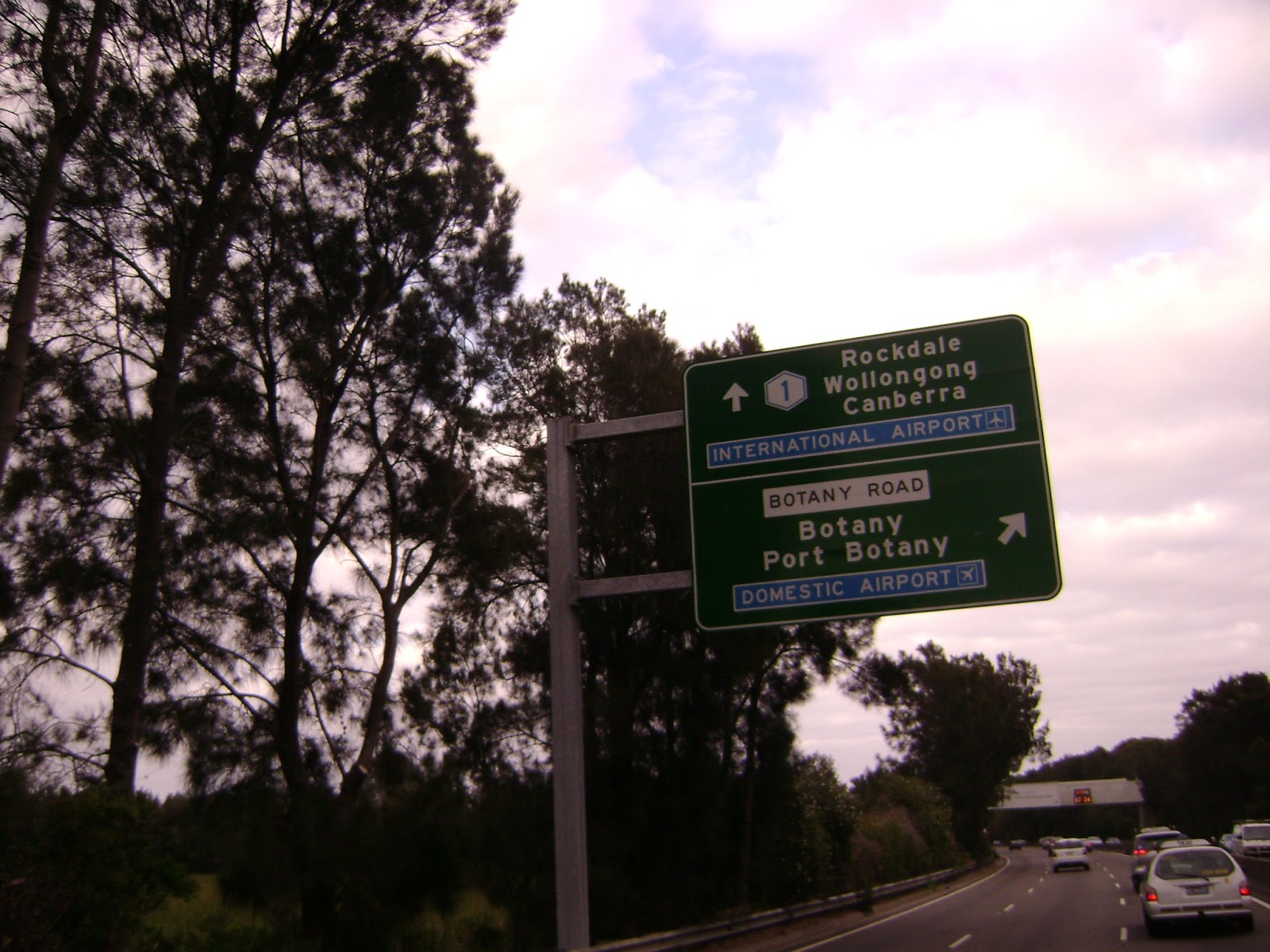
One of the advantages of teaching at a small liberal arts institution is the freedom to design and offer courses that are close to one's heart. In January 2011, I taught Tropical Ecology and, for one of the class activities, I took a group of students on a 10 day trip to Puerto Rico. (Click here to read about the trip to Puerto Rico). This January (2013), I am teaching Ecology of Australia and, naturally, it entails a field trip to Australia! What follows is a travelogue of our adventures together, the sights we have seen, the things we are doing, and the lessons we are learning while exploring a land far removed from home. (You can the previous posts in this thread here). After an exhausting and fun-filled three days in Sydney, it was time for the "meat and bones" part of the trip. We woke up early in the morning and took a taxi ride from hell to the airport, this time we were headed to the domestic terminal for a flight to Cairns.
(Hannah Steen 2013)
We had our obligatory conch photo at the airport before boarding the flight. (I am not exactly sure what Alexa is up to, though!)
(C.S. Manish 2013)
Approximately 1500 miles from Sydney, the flight to Cairns took about 3 hours or so.
(C.S. Manish 2013 - from Google Maps)
Cairns airport reminded me of a lot of the West Indian airports I had been to. It's a small airport, nestled among the mountains, with an approach path that takes you over the ocean. The vegetation is perfectly tropical and the humidity and heat hit you as soon as you step off the plane. And the smell of the ocean and rain-soaked ground is very evident.
(C.S. Manish 2013)
A short taxicab (van) ride to the city was just the tonic we needed to get ready for Cairns!
(C.S. Manish 2013)
(Note: In order to conserve space on the blog and make it easier to scroll through, I am condensing how much of the post is displayed. To read the rest of it, simply click on the "Click here for the rest of my jaywalk" link below).