1) I do not follow Major League Baseball closely any more. I'd be hard-pressed to name 5 players who are currently active. The first name that comes to mind, though, is Ichiro Suzuki. I recently wondered whether he had retired and came across this haunting, haunting piece about Ichiro - the man who has become the very thing he hated to become as a 3 year old. Very sad.
2) If a tree is falls in a forest but there is no one to hear it does it make a sound? The best bowling analysis EVER in a T20 match happened at Lal Bahadur Stadium in Hyderabad but to the cricketing it world it does not exist. Alfred Absolem took a scarcely believable 7 wickets for 15 runs but his achievement will probably never be acknowledged because it was a played between two teams in the Indian Cricket League (ICL) which was obliterated by the IPL/BCCI within a few years.
3) The only NFL player I actually wanted to watch in person was Randy Moss. I managed to do it once at Ford Field in Detroit. If you want to know why he has great, watch this: EVERY TD of his greater than 40 yards. Mind you, these are only those that were 40 yards or longer....
Only one man could bring me out of blogging semi-retirement: the Rajah himself.
The story arc of Roger Federer's resurgence has been written many times over by multiple authors around the world and I will not repeat it here. A cursory Google search will suffice. Instead I want to put down some random, disjointed thoughts that float through my brain...
a) For a long time DH and I were reconciled to the fact that he'd be stuck on one prime number - 17. When he won #18 earlier this year in Australia, DH remarked that he would HAVE to win one more to get back to a prime number because that's where he should be (by himself and one). Well, what do you know? It may be time to start thinking of 23 now. Impossible? Well, many of us thought 18 was impossible.
b) Remember this commercial from 10 years ago? It was released on July 6th, 2007, just moments after Roger had won his 10th major and was narrated by Tiger Woods who ended it with the haunting words: My name is Tiger Woods. I have 12 majors and counting. So keep up, buddy.
Yesterday, Roger did what Tiger always dreamed of - overtaking Jack Nicklaus' major count (18). For the record, Tiger has stalled at 14 for over eight years and it does not appear he is going to add to that total.
c) The Federer of 2017 is winning because he is better than the Federer of a few years ago. He is winning because he has improved. His backhand, especially, is a lot flatter and more potent. the elegant top-spin laden one has been beefed up by another version - a flattened, whiplash of a shot that singes across the court with power that is approaching Wawrinka territory.
d) The 2017 Wimbledon final was, finally, lacking in excitement or prolonged tension for Federer. But I am not complaining one bit. I'll take that any day over the 5 set gut-wrencher from earlier this year at the Australian Open where he was (gasp!) trailing 1-3 in the fifth set. Even today I sometimes break into a cold sweat thinking about what might have happened had Roger not raised his game.
Imagine this - Nadal wins the Australian Open. Suddenly the major head-to-head is 17-15 in Roger's favor with the French Open coming up where Nadal would make it 17-16. Oh dear...the GOAT narrative would have taken a drastic turn for the worse for us FedFans. Phew! Thank heavens for that atomic backhand (and Robin Soderling).
e) The loss to Juan Martin del Potro at the 2009 US Open stung for a long, long time. Then came the capitulation to Marin Cilic in 2014 when all Roger had to do was take out Cilic and then Kei Nishikori (neither of whom he had ever lost to at that point in time). For years, I've wondered what those two missed US Opens would have done for his legacy. Suddenly, after what has transpired this year, the pain has eased tremendously.
f) Roger is the only man to have played at least 5 finals at each major. At the French, he has one win (in 2009, thank heavens for Soderling) and 4 losses to the clay GOAT - Rafael Nadal. One wonders what the actual count might have been if the gods had not sent Nadal to mess with us FedFans.
g) But seriously, just watch these 5 games from the 5th set of the 2017 Australia Open again and marvel at how close it was to being a completely different narrative. A matter of inches...literally, on multiple occasions.
h) In 2012 after the Olympics in London, in spite of winning a silver medal, it seemed quite inconceivable that Federer would last as long as Rio in 2016. Verily, it came to pass - Federer did not play in Rio while recovering from his myriad injuries. But if you had told me in 2012 that he would not play in Rio but would win multiple majors in 2017, I would not have believed it possible. I am still having a tough time believing it.
i) Hailing from a nation where we revere the Krishnans and Amritraj for simply making it to the quarter-final at Wimbledon, it is astonishing to think that Federer has played 70 Grand Slam events (tied for first all-time with Fabrice Santoro) and has reached the quarter-final or better in 50 of them. Yes, 50 of them!
j) For a man known for the beauty of his groundstrokes and the fluidity and grace of his foot movement, it is mind-boggling to think that he is third all-time in the list of aces hit on the ATP tour. And, if he plays the rest of the year, he's definitely going to be #2 behind Ivo Karlovic.
k) The final word has to, definitely, belong to the late, great David Foster Wallace from his famous essay: Federer as a religious experience. Mind you, this was published on August 20, 2006, almost 11 years ago, but it still resonates just as loudly today:
... Roger Federer is showing that the speed and strength of today’s pro game are merely its skeleton, not its flesh. He has, figuratively and literally, re-embodied men’s tennis, and for the first time in years the game’s future is unpredictable. (...) Genius is not replicable. Inspiration, though, is contagious, and multiform — and even just to see, close up, power and aggression made vulnerable to beauty is to feel inspired and (in a fleeting, mortal way) reconciled.
Various articles have been written bemoaning the death of Test cricket, too many to even bother linking to. Just as many articles have been written in support of it, pointing out the most recently completed thriller as an example of how the format is awesome and must not be killed.
Test cricket is unique among the 3 forms of the game in that there is an option for an honorable draw. THAT is what sets it apart from T20 and ODIs. And for every thumping win that a team has, there is a gut-wrenching draw or near-draw to fall back upon. This was never better illustrated than the recent two Test series between Sri Lanka and England, where Sri Lanka nearly lost the first one but held on for a draw and nearly drew the second one but hung on for a win.
Mark Nicholas said it best in the article linked above. Here's an excerpt from it (I strongly urge you to read the whole thing to get a taste of the drama):
Now if you wanted to slag off Moeen, you damn well could. I mean, fancy not nicking the strike to save Jimmy from himself (Joke.) Jimmy, Jimmy, Jimmy. Balls 51 to 54 were superbly handled. Two remained to save the match, a task incidentally that no other team in history that had been five down going into the last day of a Test had achieved.
Eranga sprinted up the Headingley hill. He flung the leather short and hard at Anderson's throat. If only Anderson had ducked, or swayed, or slipped, or fell. But he didn't. See Moeen, Jimmy tried to play this frightening missile with his bat, or glove, or hand, or wrist or something. From his bat, it ballooned up in the air and was caught. If it had been you Moeen, no problem. You are a marvellous batsman. Whereas Jimmy, if not quite a rabbit, is no Geoff Boycott. The best nought in the history of cricket came to nothing, whichever way you look at it.
One of the advantages of teaching at a small liberal arts institution is the freedom to design and offer courses that are close to one's heart. In January 2011, I taught Tropical Ecology and, for one of the class activities, I took a group of students on a 10 day trip to Puerto Rico. (Click here to read about the trip to Puerto Rico). In January 2013, I taught Ecology of Australia and, naturally, it entailed a field trip to Australia! What follows is a travelogue of our adventures together, the sights we saw, the things we did, and the lessons we learned while exploring a land far removed from home. (You can see the previous posts in this thread here).
Day 10 finally rolled around in spite of our best efforts to stave it off. The wee hours of the night were spent in packing and reminiscing about our time in Australia. Even Marie's travel companion - Gumby - seemed a little sad that the trip was coming to an end.
(Katherine Lederer 2013)
So, it was with a heavy heart that we left Cairns early in the morning, getting onto the plane the old-fashioned way - via a stairwell to the cabin.
(Katherine Lederer 2013)
Cairns to Sydney was a short flight. After a couple of hours, we then got onto the longer flight to Dallas. We left in the morning to bright skies, much appreciated by Gumby....
(Katherine Lederer 2013)
(Note: In order to conserve space on the blog and make it easier to scroll through, I am condensing how much of the post is displayed. To read the rest of it, simply click on the "Click here for the rest of my jaywalk" link below).
One of the advantages of teaching at a small liberal arts institution is the freedom to design and offer courses that are close to one's heart. In January 2011, I taught Tropical Ecology and, for one of the class activities, I took a group of students on a 10 day trip to Puerto Rico. (Click here to read about the trip to Puerto Rico). In January 2013, I taught Ecology of Australia and, naturally, it entailed a field trip to Australia! What follows is a travelogue of our adventures together, the sights we saw, the things we did, and the lessons we learned while exploring a land far removed from home. (You can see the previous posts in this thread here).
In the original plan, Day 9 was to be a free day for the students to explore on their own. However, since we had unsuccessfully tried to visit the Cairns Botanic Gardens earlier in the week, we added it to the agenda.
(Sandra 2013)
The Cairns Botanic Gardens is located about 5km from the city center. We took a bus to the Collins Avenue entrance and began our tour of the facility.
(Trey Cusick III 2013)
The Cairns Botanic Gardens (also known as the Flecker Botanic Gardens) is a typical botanical garden containing a wide range of plants (clearly labelled with their scientific names), focusing mainly on ones found in the wet tropical regions of the world such as Southeast Asia.
(Trey Cusick III 2013)
Distributed over 38 hectares, the property was established in 1886 indicating that many of the trees are really old and well-preserved in their native habitat.
(Katherine Lederer 2013)
(Note: In order to conserve space on the blog and make it easier to scroll through, I am condensing how much of the post is displayed. To read the rest of it, simply click on the "Click here for the rest of my jaywalk" link below).
One of the advantages of teaching at a small liberal arts institution is the freedom to design and offer courses that are close to one's heart. In January 2011, I taught Tropical Ecology and, for one of the class activities, I took a group of students on a 10 day trip to Puerto Rico. (Click here to read about the trip to Puerto Rico). In January 2013, I taught Ecology of Australia and, naturally, it entailed a field trip to Australia! What follows is a travelogue of our adventures together, the sights we saw, the things we did, and the lessons we learned while exploring a land far removed from home. (You can see the previous posts in this thread here).
The skyrail is a series of gondolas that rise from the base station at Caravonica Terminal, located about 15 miles from Cairns, and traverses about 7.5km (4.7mi) over the rainforest with 2 stops along the way at Red Peak, Barron Falls, finally ending at Kuranda. Along the way, we got a close look at Barron Gorge National Park.
(C.S. Manish 2013)
The Skyrail system comprises of 114 gondolas that travel over a path that is held up by 33 towers, the tallest of which is 133 feet (40.5m) high.
(Katherine Lederer 2013)
(Note: In order to conserve space on the blog and make it easier to scroll through, I am condensing how much of the post is displayed. To read the rest of it, simply click on the "Click here for the rest of my jaywalk" link below).
One of the advantages of teaching at a small liberal arts institution is the freedom to design and offer courses that are close to one's heart. In January 2011, I taught Tropical Ecology and, for one of the class activities, I took a group of students on a 10 day trip to Puerto Rico. (Click here to read about the trip to Puerto Rico). In January 2013, I taught Ecology of Australia and, naturally, it entailed a field trip to Australia! What follows is a travelogue of our adventures together, the sights we saw, the things we did, and the lessons we learned while exploring a land far removed from home. (You can the previous posts in this thread here).
Apart from being a campus offering on-site classes, James Cook University has numerous satellite locations where research opportunities abound. One of them is the Daintree Rainforest Observatory, managed by Site Manager Peter Byrnes.
About 140km (~ 90miles) north of Cairns, the Observatory is in a section of protected rainforest adjacent to the Daintree National Park. The Daintree rainforest lays claim to having the highest biodiversity of plant and animal species anywhere in Australia. The site is flanked to the west by coastal ranges rising to more than 1400m and by the Coral Sea to the east. The proximity of the coral reef to a rainforest makes it a fairly unique situation.
We took the Captain Cook Highway out of Cairns, heading north in a van.This winding ocean road is as you would expect it to be - the treeline frequently opens up to reveal great vistas and lookouts along the way
(Victoria Vollmer 2013)
The drive is littered with small beaches that were inviting us to stop but had to be saved for some other (undecided) date in the future.
(Sandra 2013)
(Note: In order to conserve space on the blog and make it easier to scroll through, I am condensing how much of the post is displayed. To read the rest of it, simply click on the "Click here for the rest of my jaywalk" link below).
One of the advantages of teaching at a small liberal arts institution is the freedom to design and offer courses that are close to one's heart. In January 2011, I taught Tropical Ecology and, for one of the class activities, I took a group of students on a 10 day trip to Puerto Rico. (Click here to read about the trip to Puerto Rico). In January 2013, I taught Ecology of Australia and, naturally, it entailed a field trip to Australia! What follows is a travelogue of our adventures together, the sights we saw, the things we did, and the lessons we learned while exploring a land far removed from home. (You can the previous posts in this thread here).
On Day 6, we hopped onto a taxi and took a short ride to:
(C.S. Manish 2013)
According to their website, James Cook University, established in 1970, is a multi-campus institution with main campuses in Cairns, Singapore and Townsville, with smaller study centers in Mount Isa, Thursday Island and Mackay. They also have a campus in Brisbane, operated by Russo Higher Education. JCU is Queensland's second-oldest University and serves over 17,500 students.
(C.S. Manish 2013)
(Note: In order to conserve space on the blog and make it easier to scroll through, I am condensing how much of the post is displayed. To read the rest of it, simply click on the "Click here for the rest of my jaywalk" link below).
One of the advantages of teaching at a small liberal arts institution is the freedom to design and offer courses that are close to one's heart. In January 2011, I taught Tropical Ecology and, for one of the class activities, I took a group of students on a 10 day trip to Puerto Rico. (Click here to read about the trip to Puerto Rico). This January (2013), I am teaching Ecology of Australia and, naturally, it entails a field trip to Australia! What follows is a travelogue of our adventures together, the sights we have seen, the things we are doing, and the lessons we are learning while exploring a land far removed from home. (You can the previous posts in this thread here).
On Day 5 of the trip, having acclimated well to the rhythms of the Land Down Under, we undertook a (mini)voyage to one of the seven natural wonders of the world - The Great Barrier Reef!
The world's biggest naturally-made structure, the Great Barrier Reef (GBR) can be easily seen from outer space.
This giant structure is the product of years and years of build-up of the skeletal shells of tiny organisms known as coral polyps. It gives rise to an amazing ecosystem, rich in nutrients and exposed to abundant sunlight and, consequently, a tremendous variety of plant and animal life. The biodiversity of the area is incredible and even more amazing than one can imagine.
The GBR is located in the Coral Sea and lies parallel to the north-east coast of Australia in the state of Queensland, extending more than 2600 km (over 1600 miles) and covering an area about 344,400 square km (133,000 sq miles) .
Travel to the GBR is very carefully monitored by Australian authorities and most tour operators are restricted to visiting specifically chosen reefs or islands in order to reduce the potential impact of millions of human beings thrashing their way through the area.
A short, quick trip along the Boardwalk from the hostel took us to the Cairns Marina, where the tour operator's boat was docked.
(Kinsley Shoup 2013)
After signing our lives away (or so it seemed) and listening to a serious lecture on safety features and measures, we set sail, so to speak, on a boat to the Reef. Soon, we left Cairns behind...
(Note: In order to conserve space on the blog and make it easier to scroll through, I am condensing how much of the post is displayed. To read the rest of it, simply click on the "Click here for the rest of my jaywalk" link below).
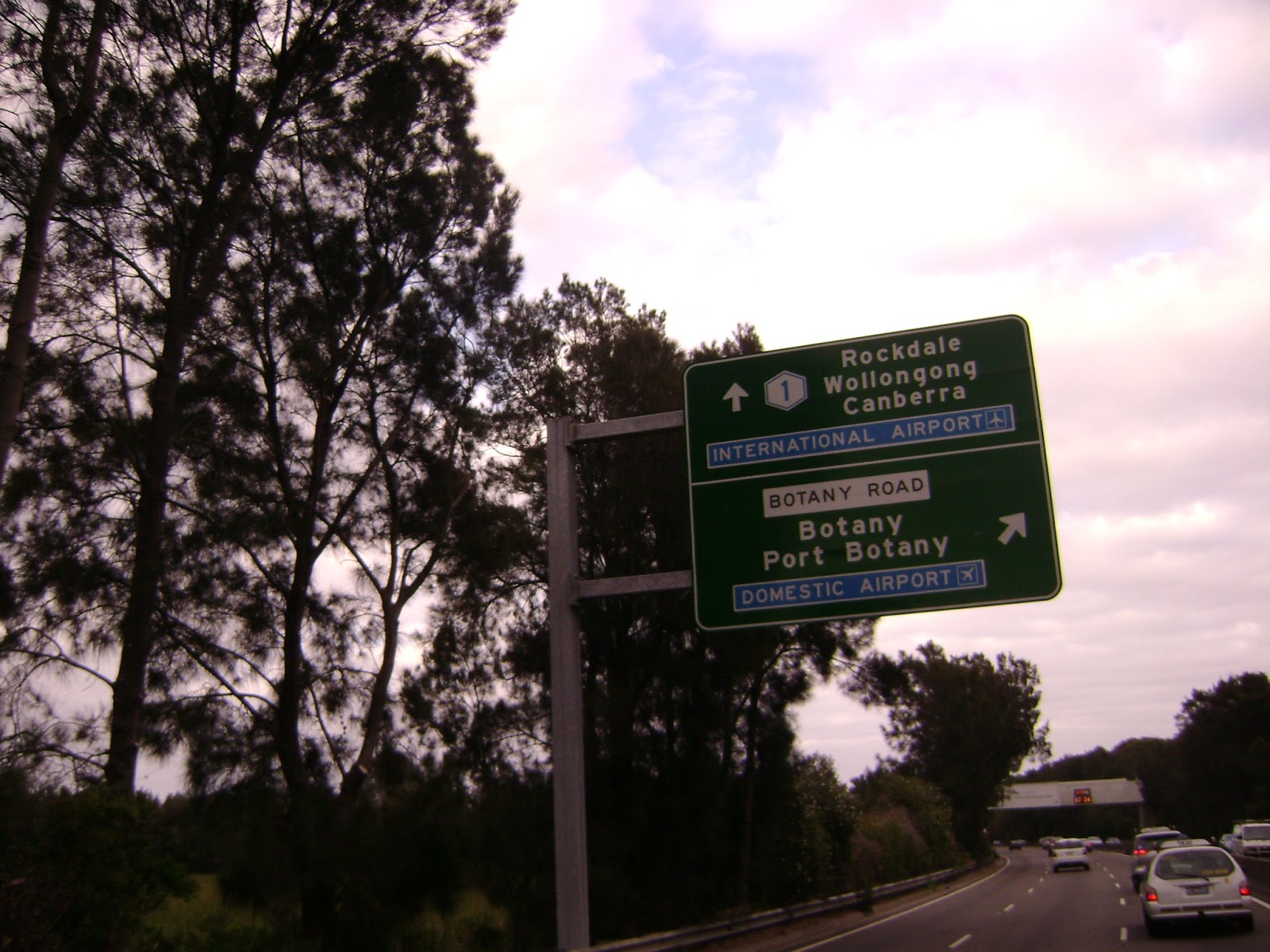
One of the advantages of teaching at a small liberal arts institution is the freedom to design and offer courses that are close to one's heart. In January 2011, I taught Tropical Ecology and, for one of the class activities, I took a group of students on a 10 day trip to Puerto Rico. (Click here to read about the trip to Puerto Rico). This January (2013), I am teaching Ecology of Australia and, naturally, it entails a field trip to Australia! What follows is a travelogue of our adventures together, the sights we have seen, the things we are doing, and the lessons we are learning while exploring a land far removed from home. (You can the previous posts in this thread here). After an exhausting and fun-filled three days in Sydney, it was time for the "meat and bones" part of the trip. We woke up early in the morning and took a taxi ride from hell to the airport, this time we were headed to the domestic terminal for a flight to Cairns.
(Hannah Steen 2013)
We had our obligatory conch photo at the airport before boarding the flight. (I am not exactly sure what Alexa is up to, though!)
(C.S. Manish 2013)
Approximately 1500 miles from Sydney, the flight to Cairns took about 3 hours or so.
(C.S. Manish 2013 - from Google Maps)
Cairns airport reminded me of a lot of the West Indian airports I had been to. It's a small airport, nestled among the mountains, with an approach path that takes you over the ocean. The vegetation is perfectly tropical and the humidity and heat hit you as soon as you step off the plane. And the smell of the ocean and rain-soaked ground is very evident.
(C.S. Manish 2013)
A short taxicab (van) ride to the city was just the tonic we needed to get ready for Cairns!
(C.S. Manish 2013)
(Note: In order to conserve space on the blog and make it easier to scroll through, I am condensing how much of the post is displayed. To read the rest of it, simply click on the "Click here for the rest of my jaywalk" link below).
One of the advantages of teaching at a small liberal arts institution is the freedom to design and offer courses that are close to one's heart. In January 2011, I taught Tropical Ecology and, for one of the class activities, I took a group of students on a 10 day trip to Puerto Rico. (Click here to read about the trip to Puerto Rico). This January (2013), I am teaching Ecology of Australia and, naturally, it entails a field trip to Australia! What follows is a travelogue of our adventures together, the sights we have seen, the things we are doing, and the lessons we are learning while exploring a land far removed from home. (You can the previous posts in this thread here). Having figured out the joys of a ferry ride on the previous day, it was not a novel experience for us (by-now seasoned) travelers to take another one. This time the destination was Taronga Zoo!
(Kinsley Shoup 2013)
The above photograph also serves as a portent of things to come. Later in the day we would walk on the Harbour Bridge and make our way to the park that has the ferris wheel (look closely!), but that is a story for a little later.
For now, enjoy the view of one side, but don't forget to take in the view of the other side, as well....
(Kinsley Shoup 2013)
And here's a great photograph of the two iconic landmarks together...
(Katherine Lederer 2013)
The ferry dropped us off at a dock and we took a gondola lift up a hill, reminiscent of similar rides that I have been on at Omaha's Henry Doorly Zoo and the San Diego Zoo (there seems to be a theme developing here). The gondola lift runs from the bottom of the park close to the ferry wharf, and transports passengers to the top end of the zoo, where the main entrance is located.
(Note: In order to conserve space on the blog and make it easier to scroll through, I am condensing how much of the post is displayed. To read the rest of it, simply click on the "Click here for the rest of my jaywalk" link below).
One of the advantages of teaching at a small liberal arts institution is the freedom to design and offer courses that are close to one's heart. In January 2011, I taught Tropical Ecology and, for one of the class activities, I took a group of students on a 10 day trip to Puerto Rico. (Click here to read about the trip to Puerto Rico). This January (2013), I am teaching Ecology of Australia and, naturally, it entails a field trip to Australia! What follows is a travelogue of our adventures together, the sights we have seen, the things we are doing, and the lessons we are learning while exploring a land far removed from home. (You can the previous posts in this thread here). An early morning wake-up call was followed by an interesting breakfast, featuring products one normally does not see in the US. The honey? Maybe. The vegemite? Not so much! All I can say for the latter is that it is quite salty and is supposed to be an acquired taste (and I did not acquire it in spite of trying it for 3 days).
(Trey Cusick III 2013)
(Trey Cusick III 2013)
On tap for the morning was a visit to Darling Harbor. But before that we had a few minutes to kill, so a few of us went on a walk to the Sydney Harbor Bridge and, along the way, saw lots of interesting little nuggety things.
(Trey Cusick III, Katherine Lederer, and C.S. Manish)
(Note: In order to conserve space on the blog and make it easier to scroll through, I am condensing how much of the post is displayed. To read the rest of it, simply click on the "Click here for the rest of my jaywalk" link below).
One of the advantages of teaching at a small liberal arts institution is the freedom to design and offer courses that are close to one's heart. In January 2011, I taught Tropical Ecology and, for one of the class activities, I took a group of students on a 10 day trip to Puerto Rico. (Click here to read about the trip to Puerto Rico). This January (2013), I am teaching Ecology of Australia and, naturally, it entails a field trip to Australia! What follows is a travelogue of our adventures together, the sights we have seen, the things we are doing, and the lessons we are learning while exploring a land far removed from home. (You can the previous post in this thread here).
At the Omaha airport, after picking up our boarding passes,
the group took the first of (many) group photos. In time, everyone got used to me signaling
for group huddles with the buzzword – conch.
I am not sure how (or why) that was chosen as the group’s calling card,
but it stuck a chord and so it remained for the duration of the trip. (Maybe it had something to do with Lord of the FliesAnchorman).
(Note: To see the photos more clearly, click on them and they will pop up in new window).
(C.S. Manish 2013)
The flight from Omaha to Dallas was fairly uneventful. At Dallas airport, we took our time going
from one gate to another – and then it was time to leave the shores of the US
of A. Next stop….Australia!
(C.S. Manish 2013)
The flight itinerary called for a direct flight from Dallas
to Sydney, currently the longest flight of any airline in the world. (Here's some more information on it from a personal account of the trip for Wall Street Journal). Because the flight is so long and we cross the International Date Line, the trip from Dallas to Sydney involves the loss of a complete day. We left on the evening of the 2nd and reached on the morning of the 4th. Somewhere up in the sky the whole of the 3rd passed us by...or something like that.
Due to a quirky procedure the Qantas Airline flight, whilst non-stop
from Sydney to Dallas, has to stopover to refuel in Brisbane on the opposite trip. So, our first steps on Aussie soil
(so to speak) were in Brisbane. We
disembarked, walked through a loooooong line at a security check point and then
got back on the same plane again.
Flying into Sydney was a treat. Those on the left side of the plane were greeted with magnificent views of the city, such as this one:
(C.S. Manish 2013)
After we passed through Immigration and Customs (surprisingly quickly) we were officially in Australia!
(C.S. Manish 2013)
We paused in front of a tourism picture on the wall and took the first "conch" photo in Sydney. Don't let the backdrop fool you - this was taken indoors!
(C.S. Manish 2013)
(Note: In order to conserve space on the blog and make it easier to scroll through, I am condensing how much of the post is displayed. To read the rest of it, simply click on the "Click here for the rest of my jaywalk" link below).
It's no secret that I believe Roger Federer is the greatest tennis player of all-time. Or, at least, if there was/is a tennis player with a greater range of shots combined with grace in hitting the yellow ball, I'd like to have watched him/her play. And I'd still think Roger could have held his own.
The secret to his success (as it is with most other successful sportspersons) is how focused he is on the ball at the moment of impact and beyond. Check out this video:
And if that isn't enough for you, check him out in super-slow-motion....
Reason number 1,456,687,432 why I am a bigger fan of Roger Federer than Rafael Nadal: Their pace of play.
In the time it takes Nadal to serve between points, the viewer can surf other channels, catch up on the endings of all the NFL games and still not miss a single shot of the match.
With Federer, blink a couple of times and you may have already missed the latest exhibition of shot-making from the maestro.
Check out this split-screen video. Roger Federer wins a game in the time it takes Nadal to get ready to serve the next point. Roger's video begins with him serving at love-all. Nadal's video begins with him hitting the winning shot of a point.
a) So, last night the result of an NFL game was determined by the shoddiness of replacement referees. Ho-hum. The debacle could have been avoided had any of the Green Bay Packer defenders followed the first rule of defending Hail Mary passes - KNOCK THE BALL DOWN!
Take a look at the replay - no less than three Green Bay defenders had the chance to ice the game by simply batting the ball away.
Yet, all of them went for glory and tried to intercept the ball. See for yourself.
Serves you right. You don't have my sympathies.
b) VVS Laxman retired a few weeks ago and it hasn't sunk in yet. I am still not in the mood to write my eulogy but am getting ready for it. Until then, here are two must-read articles about the good guy of Indian cricket.
First, Peter Roebuck is no longer here to write about VVS, but when he did (in the aftermath of 281) it was fantastic. Poetry in prose.
As Laxman took guard he found himself surrounded by the din of the crowd and the biting resolution of his gum-chewing, green-capped opponents near at hand. Habitually, he cuts an impressive and impassive figure upon which hostility falls like raindrops upon a bear. He stood his ground.
Laxman was about to play the innings of a lifetime, one of the greatest knocks the game has known. His effort has not shrunk in retrospect for it was not a mere protest against fate but rather a purposeful pursuit of an impossible dream.
Second, check out Siddhartha Vadyanathan's piece, not so much for what he wrote but for some of the videos link to in the comments section.
c) If you are a famous sportsperson, maybe even the best ever in your sport, winning a match is not the end of your day's work. Here's Roger Federer's grueling post-match interview schedule. I used to wish I could play like him. Now I don't, for I do not want to have to do all the additional things that come with that gift.
e) Very rarely do I burst out laughing when I read a straight-forward sports article about how someone can help Tiger Woods get his game back on track. But this one did. Johnny Miller is soooo modest, it makes me blush to hear about all the great things he has to say about....himself.
The drive I hit on the last hole at Oakmont in 1973 at the U.S. Open was special. I'd hit every green that day, and my average birdie putt was about 10 to 12 feet. To this day, I've never seen a major championship round of that precision, with tee shots and iron shots, by anyone. That sounds like bragging, but I've seen a lot of rounds.
I am sure you have heard of The Shard. The next time you are in London you should try to do what this blogger did. (Either way, I'm sure you'll enjoy the piece, once you get past the initial paragraphs that are not really helping his narrative.)
A much better piece on that architectural project comes from Roger Ebert's blog. Ebert may have lost the ability to speak but he has definitely not lost his voice.
(For more photos of the structure itself, click here).
On a totally unrelated (and related) note - here's a very rare image, one that I am 100% confident will never be taken again - an artist working on the least-known skill of his.
Trolling through the web I often come across things that I file away for future (posting) reference. Here are some of the ones that still seem interesting enough to pass on to you.
a) An oldie, but a goldie. Do you want to know why Test cricket is dying (i.e. why spectators are not turning up to watch it any more?)? Well, look no further - it's the spectators who are to blame.
b) Who says cricket is a batsman's game? Here's some food for thought - Over 2,000 players have played Test cricket. As of December 2011, a debutant has taken 5 wickets in an inning on 143 occasions. In contrast, in spite of many more opportunities, only 93 debutants have scored a 100.
e) Which batsman and bowler has the highest rating - ever - in the history of Test cricket? Check out #3 on the bowler's list. He was the first bowler who scared me even though I was just watching him bowl on TV. The #1 on the Batting list is not a surprise, but see where Sachin Tendulkar's highest-ever rating places him on the all-time list.
g) I don't think I will ever have the guts to take this ride. But, it does not stop me from living it vicariously.
h) And if you liked the previous one, you may like this one, too:
i) And, finally, I was debating whether to end with this picture, or this picture, or this picture or this picture. But instead I settled for the one reproduced below. I hope it is of Laxman tying his shoelaces for future battles, not of him getting ready to hang up his boots (more on that in a different post).
Trolling through the web I often come across things that I file away for future (posting) reference. Here are some of the ones that still seem interesting enough to pass on to you.
a) The shirts worn by the Australian Test cricket players has new design, probably to help them sweat less or something like that. All I know is that it makes it seem like they are wearing sports bras under their shits. Not a good look for them. Fail!
b) Of late, soundbites from MS Dhoni have started to take on a fairly simplistic note, probably mindful of his ever-burgeoning public image. But there was a time, not so long ago, when the man would speak from his heart and speak eloquently enough about his life. Here's an interview from 2008, a few months after he had become India captain and well before he became the media-created behemoth he is today.
c) While on MSD, have you ever seen a batsman "walk" for an LBW. Take a look at MSD's reaction from about the 1:50 mark of this video. Who knew that in a few years from then, he'd be captaining Murali to IPL (cough) glory.
d) I was directed to the video in the previous point from the subject of this musing. For those of us who cannot stand the television coverage of today (aptly described as a bunch of commercials interrupted by a few seconds of cricket), our best recourse to "watching" a game remains online text portals such as CricInfo's outstanding ball-by-ball commentary. Another frequently visited website is The Guardian's Over By Over (OBO). To whet your appetite, here's an OBO of the 2011 World Cup final between Sri Lanka and India. Almost as good as some of my match day analyses. *sigh*